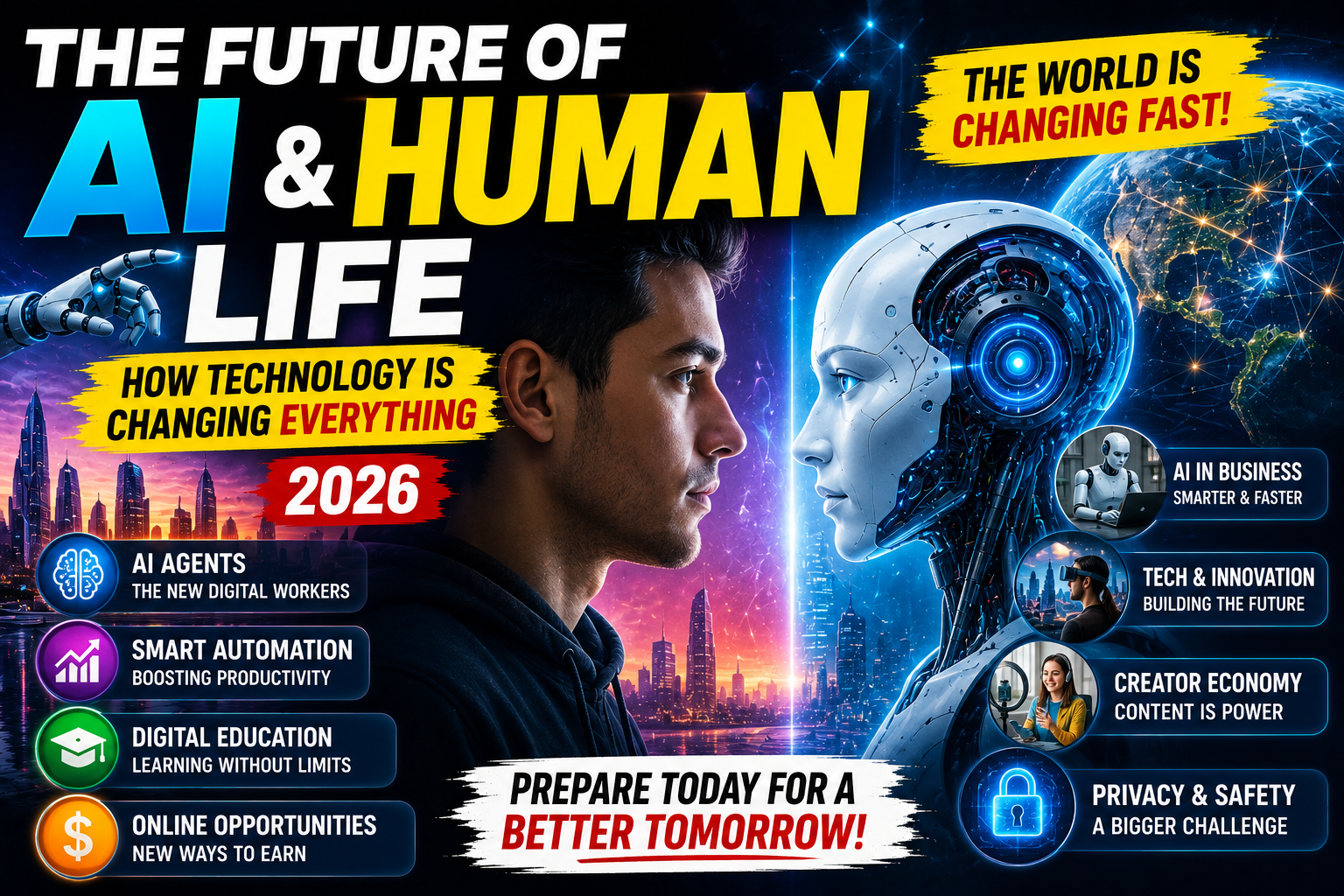
The world is entering a new digital era where Artificial Intelligence is becoming part of everyday life. From smartphones and businesses to education and entertainment, AI is transforming how people live, work, and communicate.
In 2026, technology is moving faster than ever before. AI agents, automation, smart devices, and digital platforms are creating new opportunities while also changing traditional jobs and lifestyles.
This article explores how AI and modern technology are shaping the future of human life.
What Is Artificial Intelligence?
Artificial Intelligence (AI) refers to computer systems that can perform tasks normally done by humans.
These tasks include:
- Writing content
- Solving problems
- Understanding language
- Creating images
- Generating code
- Making decisions
Modern AI tools can now think, learn, and respond more naturally than ever before.
AI Is Becoming Part of Daily Life
Today, millions of people use AI without even realizing it.
Examples include:
- Voice assistants
- Recommendation systems
- AI chatbots
- Smart cameras
- Navigation apps
Popular AI platforms like ChatGPT, Claude AI, and Google Gemini are helping users complete tasks faster and more efficiently.
How AI Is Changing Jobs
AI is transforming industries across the world.
Many businesses now use AI for:
- Customer support
- Marketing
- Content creation
- Data analysis
- Automation
While some traditional jobs may decrease, many new digital jobs are also being created.
Future careers may include:
- AI trainers
- Prompt engineers
- Automation specialists
- AI content creators
Technology is not only replacing work — it is also creating new opportunities.
The Rise of AI Agents
AI agents are one of the biggest technology trends in 2026.
These smart systems can:
- Work automatically
- Complete tasks independently
- Analyze information
- Communicate naturally
Companies are investing billions into AI development because it improves productivity and reduces manual work.
Many experts believe AI agents could become digital assistants for everyone in the future.
Social Media and Digital Content Are Evolving
The internet is changing rapidly because of AI-generated content.
Creators now use AI tools for:
- Video scripts
- Image generation
- Voice cloning
- Editing
- SEO writing
Platforms like YouTube, Instagram, and TikTok are filled with AI-assisted content creators.
This has made content production faster and more competitive.
Education Is Becoming More Digital
Students can now learn almost anything online.
AI-powered education tools help with:
- Homework
- Research
- Language learning
- Coding practice
- Exam preparation
Online learning platforms are making education more accessible worldwide.
Smart Devices and Future Technology
Modern technology is becoming smarter every year.
Future innovations may include:
- AI-powered robots
- Smart homes
- Virtual reality workplaces
- Advanced wearable devices
- Self-driving vehicles
Companies like Apple, Google, and Tesla continue to push innovation forward.
Challenges of the AI Era
Although AI brings many advantages, there are also concerns.
Major challenges include:
- Privacy risks
- Fake AI-generated content
- Job displacement
- Cybersecurity threats
- Dependence on technology
Governments and technology companies are working on AI safety and regulation to manage these risks.
Can AI Replace Humans?
AI is becoming more powerful, but human creativity, emotions, and decision-making are still unique.
AI works best as a tool that helps humans:
- Save time
- Improve productivity
- Automate repetitive tasks
The future will likely involve humans and AI working together rather than complete replacement.
Final Thoughts
The world in 2026 is being shaped by Artificial Intelligence and rapid digital transformation. AI is changing industries, careers, education, entertainment, and communication at an incredible speed.
People who learn modern digital skills and adapt to new technologies will have the biggest opportunities in the future.
The AI revolution has already begun — and it is only getting started.